
BLOG
June 3rd, 2008
Via Walrus Magazine, a starting look at the Chinese Dust Bowl, probably the largest conversion of productive land into sand anywhere in the world. As the article notes:
“…Deserts cover 18 percent of China today. Of those, 78 percent are natural, while 22 percent were created by humans. Almost all of them lie along the provinces of Inner Mongolia, Ningxia, Gansu, and finally Xinjiang, at the edge of Central Asia.
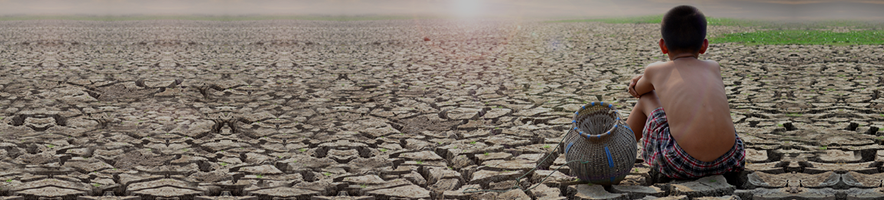
…To date, Chinese farmers and herders have transformed about 400,000 square kilometres of cropland and verdant prairie into new deserts. The shepherds have overgrazed the steppes, allowing their sheep and goats to chew the grass all the way down to its roots. The farmers, for their part, have over-exploited the arable land by opening fragile grasslands to cultivation and over-pumping rivers and aquifers in the oases bordering the ancient deserts. The area of desert thus created is equivalent to more than half the farmland in Canada.
The soil, once it is barren, is swept up by the wind into dust storms, battering the capital, Beijing, and then moving on to Korea and Japan. The most massive of the yellow clouds of dust make their way across the Pacific and reach North America. The loss of precious topsoil for Chinese agriculture ends up polluting both China’s cities and countries halfway around the world.
The North American “dust bowl†of the 1930s forced three million farmers to abandon their land in the Midwest and the Canadian prairies. But the Chinese exodus could reach well into the tens of millions. Governmental relocation programs for ecological refugees are already in full swing.
…Since 1978, Chinese forestry engineers have been supervising the planting of the Great Green Wall. Some 4,500 kilometres in length, the tree barrier is intended, when completed in several decades, to prevent desertification by protecting the fragile land from wind.
Another project of equally immense proportions is the South-to-North Water Transfer. It aims to redirect to the north, by the year 2050 via a network of canals, about 50 billion cubic metres of water per year from the rivers of southern and central China. The project will obliterate heritage sites and engulf villages and towns.
…Despite remarkable local achievements, overall desertification in China remains uncurbed. In 2006, there were seventeen dust storms, the worst of which dumped 330,000 tonnes of dust on Beijing in one night….”
October 28th, 2026 at 10:21 pm
Focusing on Of those, 78 percent are natural, while 22 percent were created by humans clarifies the trade-off better than a vague summary. Separately, if you want a short break, noillirk.app is a daily word-guessing game with no download.
October 28th, 2026 at 10:39 pm
Agree that Of those, 78 percent are natural, while 22 percent were created by humans deserves the emphasis; Almost all of them lie along the provinces of Inner Mongolia, Ningxia, Gansu, an reinforces it. For a short reset, krillion.me is a free browser word game.
October 28th, 2026 at 11:01 pm
The detail about Of those, 78 percent are natural, while 22 percent were created by humans is the part that stuck with me — it is concrete enough to argue with. As a light side note, mimicparty.me is a free browser party game I have been using between reading sessions.