Iraqis voted in a parliamentary election on 11 November and, though pre-election surveys predicted a record-low turnout, the final total turnout was 56.11% according to the Independent High Electoral Commission. (Turnout for the 2021 parliamentary election was 43.3%.)
Incumbent prime minister Mohammed Shia’ al-Sudani’s Construction and Development Coalition, won 46 seats in the 329-seat Council of Representatives of Iraq.
Now the election is over and Sudani faces the task of building a governing coalition. (After the 2021 election, it took one year to form a government.) 38 political parties won seats in the contest, so Iraq’s complex political landscape will demand negotiation and consensus building to form a government. Other major winners are former prime minister Nouri Al-Maliki (Shia/State of Law Coalition), former parliament speaker Mohammed al-Halbussi (Sunni/Taqadom (Progress) party), former militia leader Qais al-Khazali (Shia/Sadiqoun Movement), and the Kurdistan Democratic Party.
Whoever can corral enough support to become Iraq’s next prime minister faces four major challenges: the water crisis, public finances, U.S. relations, and regional entanglement with Iran.
Managing the Water Crisis
Iraq’s most immediate problem is water scarcity. It depends on Turkey and Iran for nearly 75% of its freshwater through the Tigris and Euphrates rivers, which originate upstream. Torhan al-Mufti, Sudani’s advisor on water affairs, warns that Iraq’s vulnerability stems from these transboundary flows.
There is some good news: according to Mufti, water inflows from Turkey to the Tigris have doubled in two years. And Iraq is taking proactive steps, such as the November 2025 Iraq-Turkey water agreement that introduces a five-year water management mechanism between the two nations. Under the deal, Turkey will oversee and manage water releases and related infrastructure rehabilitation, including dams and distribution systems, during this period, after which control will revert to Iraq.
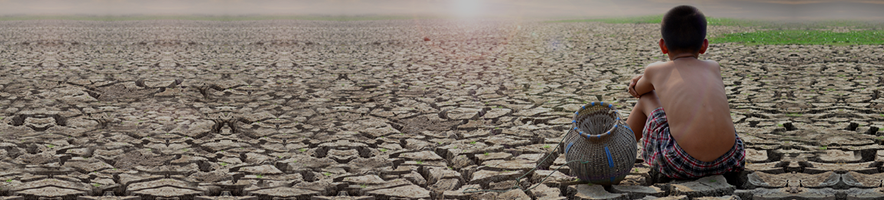
Nevertheless, 2025 has been Iraq’s driest year since 1933. Rainfall shortages and Turkish and Iranian dam projects reduced Tigris and Euphrates water levels by up to 27%. Reservoirs now hold less than 8 billion cubic meters, their lowest volume in over eight decades.
In September, the government suspended wheat planting due to insufficient water. Southern Iraq, particularly Basra, home to 3.5 million people, faces a growing humanitarian crisis as residents rely on trucked-in water.
Weak Public Finances
Iraq’s economy relies on oil revenues, which comprise over 90% of Iraq’s federal budget and expose the country to global price fluctuations, geopolitical tensions, and production quotas from OPEC+. Of total government spending, operational expenses (including public employee salaries) were 94%, while only 6% was for investment expenditures.
This reliance has intensified amid declining oil prices throughout the year, straining the 2025 budget and prompting calls for fiscal tightening. Iraq sells about 35% of its exports to China, making it vulnerable to China’s economic slowdown and Washington’s anti-China policies.
Sudani’s government added 370,000 employees to the public and expanded the social safety net to ease public discontent and stabilize politics temporarily, but at the cost of avoiding reforms and entrenching patronage networks.
Iraq’s energy sector is becoming more efficient and is a source of future savings. Baghdad is working to end natural gas flaring by 2027 and use it for domestic power generation, eliminating the need to import it – some from Iran, which required Washington to waive sanctions. This will save USD4 billion annually. Iraq is now self-reliant in many petrol products, including gasoline, diesel, and kerosene, and Sudani has ordered a halt to imports, saving up to USD10 billion annually.
Rather than always banking on higher oil prices, Baghdad is working to diversity the economy. The 2024-2028 development plan aims reduce reliance on oil, attract foreign investment, and expand sectors like infrastructure, agriculture, and finance. Iraq’s Development Road project aims to reduce oil dependence by making the country a trade corridor between Asia and Europe, though it may faces security challenges and resistance from neighbors hosting competing projects.
Balancing Relations with the U.S.
U.S. troops withdrew from Iraq in 2011 but returned in 2014 to fight the Islamic State (ISIS). Washington pledged to achieve the “enduring defeat” of ISIS – a mission to justify a long-term presence.
Under a recent agreement, U.S. combat forces began withdrawing in September 2025, with a full exit expected by September 2026. However, small contingents will remain in Iraqi Kurdistan and at Ain al-Asad Air Base to assist in counterterrorism operations.
In October, U.S. Secretary of State Marco Rubio urged Sudani to disarm “Iran-backed militias that undermine Iraq’s sovereignty,” which Baghdad considers different than the Popular Mobilization Forces (PMF) – a 240,000-strong force state institution established under Iraqi law that was formed to fight ISIS. The U.S. pressured Iraqi lawmakers to withdraw legislation that would place the PMF fully under government control, though internal disagreements also helped doom the bill. Sudani recently declared the armed groups have two options: join the official security institutions or transition to [unarmed] political work.
Complicating the American demands and formation of a governing coalition is that three militia-aligned parties (Sadiqoun Movement, Badr Organization, and Huquq Movement) won 51 seats, a significant share of the Shia bloc of 184 seats. The Sadiqoun Movement is the political wing of Asa’ib Ahl al-Haq, which has been designated by the U.S. as a Foreign Terrorist Organization; its leader, al-Khazali, has been personally sanctioned by the U.S. for his involvement in attacks on U.S. and Coalition personnel and their alignment with Iran’s Islamic Revolutionary Guard Corps.
And the militias are no threat to the Iraqi state because, as Ameer Al-Auqaili notes, “Militias no longer threaten to overthrow the state because they have, in many ways, become the state. They control ministries, direct security forces, and dominate economic landscapes, using the ballot box to validate their existing power.”
If the new government passes legislation that puts the PMF fully under government control, that will strain relations with the Americans. However, Washington is in no position to complain about political parties that openly win power at the ballot box, especially while U.S. President Donald Trump fêtes a former al-Qaeda member who fought American forces in Iraq, and is now the unelected (transitional) president of Syria, at the White House.
The invasion and occupation of Iraq cost the Americans over 4,400 dead and over US$3 trillion. The U.S. now faces “The Meddler’s Trap” – a self-inflicted cycle in which intervention creates new problems that policymakers feel compelled to manage indefinitely. Iraq remains caught in this dynamic: Washington wants to leave but cannot bear the risks of doing so.
Keeping Iraq Out of the U.S.–Iran Conflict
A third challenge for Iraq’s next government is avoiding entanglement in the long-running U.S.–Iran rivalry. Since the 1979 Islamic Revolution, Washington has sought to reverse what it sees as a national humiliation: the overthrow of its ally, the Shah of Iran, and the 444-day hostage crisis that followed, that may have swayed the 1980 presidential election.
Over the decades, both sides have waged a shadow war – from sanctions and cyberattacks to assassinations and economic sanctions. Iran’s ballistic missile, drone, and nuclear programs are now American justifications for continued containment.
In June 2025, U.S. airstrikes targeted three Iranian nuclear facilities. Trump claimed the operation “obliterated” Iran’s nuclear program, though American military intelligence wasn’t so sure. Meanwhile, Israel, America’s closest ally in the region, has reportedly continued assassinations and covert operations against Iranian scientists and facilities.
Iraq risks becoming a battleground by proxy. In May 2025, U.S. congressmen Joe Wilson and Greg Steube advocated sanctioning Iraq as part of the “maximum pressure” campaign on Iran. They advocated sweeping penalties on the PMF, much of Iraq’s banking and oil sectors, the Minister of Finance, “Iran’s facilitators in Iraq,” the chief justice of Iraq’s Federal Supreme Court, and former prime ministers – a decapitation attack on Iraq’s economy and sovereignty.
The International Institute for Strategic Studies observes, “Iraq has successfully maintained neutrality, navigating regional tensions through diplomatic restraint rather than military engagement.” Iraq pushed for ceasefires in Lebanon and Palestine, facilitated aid delivery to Gaza and Lebanon, and had a hand in the recent Iran-Saudi Arabia reconciliation.
The slogan of Sudani’s political project is “Iraq First,” but to Washington Iraq is a tool for pressuring Iran, all the money and dead soldiers the justification for America’s droit du seigneur; but this dynamic threatens Iraq’s national stability. The next prime minister must strengthen the economy and state institutions to successfully navigate between the U.S. and Israel and neighboring Iran to preserve Iraq’s fragile independence.
Balancing domestic needs with foreign pressures – especially from the United States and Iran—will define Iraq’s future far more than the election’s immediate outcome.
BLOG
New Iraqi Leadership Confronts Water Shortage and Economic Strain
November 20th, 2025
November 20th, 2025
Via OilPrice.com, a report on Iraq’s urgent water crisis:
-
Iraq’s latest election saw a surprisingly high turnout (56%) and a fragmented outcome.
-
The new government faces urgent challenges: a severe water crisis due to drought and upstream dams, weak public finances tied to oil dependence, and delicate relations with both the U.S. and Iran.
-
Balancing between Washington’s pressure to curb Iran-backed militias and Tehran’s influence will test Iraq’s sovereignty.
This entry was posted on
Thursday, November 20th, 2025 at
9:29 am and is filed under
Iraq. You can follow any responses to this entry through the
RSS 2.0 feed.
Both comments and pings are currently closed.
© 2026 Water Politics LLC . 'Water Politics', 'Water. Politics. Life', and 'Defining the Geopolitics of a Thirsty World' are service marks of Water Politics LLC.