As the West Dries Out, a New Generation of Dams Rise May 16th, 2026
Via Bloomberg, a look at how the cities of Colorado’s Front Range are counting on new dams to support their booming population in a deepening megadrought:
The Chimney Hollow Dam looks ancient in its simplicity, like a Neolithic mound. The largest dam built in the US in a quarter century, it is not a monumental wall of concrete like the Hoover Dam. Instead, it’s a triangular prism of granite boulders, 350 feet high and 3,700 feet long, stretching across a dry valley in northern Colorado. Two white pipes snake up the far side of the valley and out of sight, heading toward the Colorado River, about 30 miles away. On April 20 engineers turned a valve and began pumping water from the river and putting it behind the dam. Filling the reservoir completely will take years.
A new dam of this size is very rare in the US. By turning rivers into lakes, dams destroy riverine ecosystems, and environmentalists have long fought to stop new dams and remove existing ones. More than 100 were torn down last year alone, according to American Rivers, an advocacy group. In 2024 the last of four large dams on the Klamath River in California and Oregon were removed, completing what the group calls “the world’s largest dam removal.”
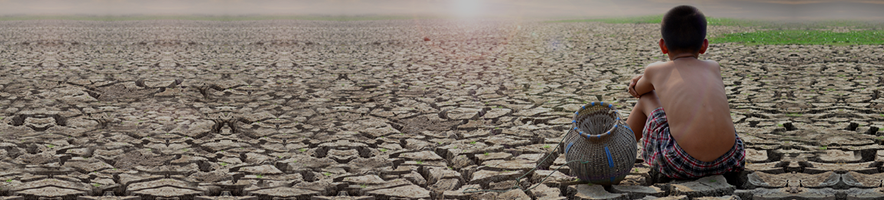
But dams do one thing well: They store water. And the American West is in the grips of a multi-decade megadrought, with mountain snowpack, by far the largest source of stored water in the West, declining rapidly. Snow levels in the Rockies this winter were the lowest ever recorded. Some experts see the region tipping into aridification, a more-or-less permanent drying out of the climate.
That means more projects like Chimney Hollow are coming. Thirty miles south, local utility Denver Water is raising Gross Dam by over a hundred feet, almost tripling its capacity. In California, construction on the $6 billion Sites Reservoir is scheduled to begin later this year. And several smaller reservoirs have recently been built or are being built in Texas.
“Without water, things don’t happen; people can’t live here,” says Malcolm Fleming, who until February served as town manager of Erie, Colorado, one of a dozen municipalities that will get water from Chimney Hollow. “It’s semi-arid high desert. We get on average 15 inches of rain a year, and that’s not enough to sustain the kind of development that you see all around.”
On a warm January evening, Fleming is celebrating the latest example of that growth: the opening of Erie’s new town hall. Once a tiny coal-mining town, Erie didn’t have paved roads until 1991. Then the area began to fill with buyers looking for homes within commuting distance of Denver and nearby Boulder. Today 43,000 people live here, mostly in neighborhoods of single-family homes with names like Vista Ridge, Canyon Creek and Redtail Ranch.
And Erie is just one patch in the fabric of the Front Range urban corridor, a five-million-person agglomeration of towns, cities, suburbs and exurbs following Interstate 25 from Pueblo, Colorado, through Denver up to the Wyoming border. By 2050, more than 800,000 additional people are expected to move here, while Erie’s population is forecast to almost double.
Before cutting a ribbon with a pair of oversized yellow scissors, Fleming opens his speech with a salute to the infrastructure that helped make his town the 15th fastest growing municipality in the US last year.
“You turn on your tap, water comes out,” he says. “You don’t think about the dozens of reservoirs that are hundreds of miles away, the hundreds of miles of pipeline that bring that water here.”
Colorado’s Dam Expansion
To support development in the thirsty Front Range, reservoirs and pipelines tap the Colorado River
Note: Select pipelines, tunnels and canals.
Source: United States Geological Survey
In the West, water rights can be more valuable than land itself. Securing them is a foundational dilemma for every developer and town manager.
The rivers that flow off the eastern slopes the Rocky Mountains naturally ran dry by July, so by the late 19th century farmers and cities began looking to other basins, especially the bountiful Colorado River on the other side of the Continental Divide. To draw a portion of the river eastward, federal and local governments drilled several holes under the Rockies. The largest of these feeds the Colorado-Big Thompson Project — the system of reservoirs and pipelines that Fleming was talking about.
When it was finished in 1957, just 15% of Colorado-Big Thompson water was owned by municipalities, with the rest going to agriculture. Today that proportion has almost flipped, with cities and towns owning 73%. As the region urbanized, the price of water rose accordingly. A single share in the project — about two homes worth of water — initially sold for $1.50. Today one sells for $57,000. Those that bought water early are therefore at a huge economic advantage when it comes to attracting development; newly suburbanized areas that were late to this party are left scrambling.
Like many municipalities across the West, Front Range towns are obliged to assemble a wide array of water resources as they grow. Erie pulls its water from six separate places, with a seventh on the way. But most of its supply comes from the Colorado-Big Thompson Project, which is why its water portfolio is now worth half a billion dollars, according to Fleming. Building a town like Erie from scratch today, paying that much for 43,000 people to bathe and drink, “is just inconceivable,” he says.
A Dam Is Born
Dams have a bad reputation for some good reasons. For the better part of a century, imperious bureaucrats built them with little thought for who or what was using the river they would ruin. Whole towns were flooded, to say nothing of forests, wetlands, trout streams and archaeological sites.
“Back in those days they just went in and said, ‘Hey, this is what we’re going to do, we’re going to build this project, and we’re just going to ram it down everyone’s throat and get it done,’” says Jeff Drager, who served for a decade as director of engineering for Northern Water, the agency that operates the Colorado-Big Thompson Project and is building Chimney Hollow.
In Colorado at least, this era came to an end in March 1989, when the Environmental Protection Agency signaled its intention to veto Two Forks Dam, a 615-foot colossus planned for a canyon on the South Platte River. The EPA decided that there were less damaging ways to get that water, a calculation required by 1972’s Clean Water Act.
When Drager arrived in Colorado to begin work on Chimney Hollow in 1995, the lessons of Two Forks were clear: Damming a flowing stream was no longer possible. If it had any hope of being permitted, a dam had to be constructed in a dry valley, then filled using a pipeline or canal. Northern Water and Larimer County had acquired such a valley in 2004 from Hewlett-Packard, which intended it as an employee retreat.
To build a dam now you need lots of permits — a process that can take decades. Sometimes it resembles a shakedown, as a procession of stakeholders demand costly favors from whoever is seeking the permit; this town gets a river walk, that one gets a water treatment plant.
For Northern Water, the hardest stakeholder to please was Grand County, located across the divide on the Colorado River.
The water rights to fill Chimney Hollow come from a dam in Grand County, called Windy Gap. A relic of the “ram it down” era, it turned a portion of the Colorado into a lake. Fish and insects began to die as soon as the reservoir was filled. Tapping more Windy Gap water stood to make things worse. Northern Water proposed a solution — a bypass channel to create a flowing stream around the dam, improving the ecology of the river and reducing the size of the reservoir. “If we hadn’t agreed to do that, we’d probably still be in the permitting process,” Drager says.
But in 2017, after all the permits were granted, a coalition of environmental organizations, led by a group called Save the Colorado, filed a lawsuit alleging that the dam would violate the Clean Water Act’s mandate to pursue the least damaging alternative, which in this case would be better conservation or buying water from farmers.
“Chimney Hollow will drain more water out of the Colorado River at the worst moment in history, when the Colorado River literally is on life support,” says Gary Wockner, Save the Colorado’s leader. “At the exact same moment when the states should be cutting back water use, the State of Colorado is increasing the amount of water diverted out of the river.”
After losing in federal district court, Save the Colorado filed an appeal, then agreed to drop its suit if Northern spent $15 million improving riverine habitat and water quality in Grand County. “If it was delayed a year or two, or whatever it took, it probably was going to cost us more than $15 million,” says Drager.
In 2021, construction could finally begin. But so few dams are built in the US these days that “there’s not a lot of contractors that have that experience. It’s a handful,” says Becky Brush, a project engineer at Northern Water. Only two companies bid on the job; Barnard Construction, which was finishing up a hydropower dam in the Canadian province of Manitoba, was selected.
Chimney Hollow is an embankment-style dam, a simple and ancient technique that uses materials found nearby — in this case, millions of tons of granite quarried from the west side of the valley. When work was underway, engineers realized there wasn’t enough clay on site to make the dam waterproof. A consultant suggested a technology called asphalt core, where a layer of pliable asphalt is built up along the center of the dam. Only three contractors worldwide had enough experience to do it, says Brush. Their best available reference was a dam under construction in Albania.
On a balmy January day, Brush and Chris Manley,Northern’s senior water quality policy specialist, park at an overlook above the dam. While Chimney Hollow was being built, this was the largest active mine in Colorado. Now it’s quiet; the trucks are gone, along with the concrete and asphalt plants. After four years and $650 million — 20% over budget — the dam was completed on time.
But there’s still work to do. In 2025, Northern discovered that the rock they’d mined contained uranium, which can leach into water. The radioactive metal is not hard to remove, but not all the municipalities set to receive water from Chimney Hollow are equipped to do so. Northern may have to build a treatment plant at the dam. And they’ll have to overcome a public relations challenge that comes with a word that’s literally radioactive.
“There are other contaminants out there that, for me, would be a much bigger concern,” says Manley, “but they don’t have a name like uranium.”
Growth Machine
Julian Jacquin grew up in New Jersey, where plenty of water fell from the sky. Five years ago, he took a job as Erie’s economic development director. “It’s weird to think of water being such a valuable resource,” he says. “Water is gold in this area.”
In addition to Chimney Hollow, Erie is now the largest shareholder in the $2.7 billion Northern Integrated Supply Project. Also known as NISP, this long-planned two-reservoir complex is designed to pull water from the Cache La Poudre River, slaking the thirst of newer Front Range towns that don’t have century-old water portfolios.
NISP has also faced opposition from environmentalists. Another Wockner-led group, Save the Poudre, filed suit in 2024, again arguing that better alternatives existed. Northern settled last year for $100 million worth of river improvements, things like a water trail along the Poudre, replete with tubing and fishing amenities. Under the terms of the settlement, if work stops for any reason, the payments stop too, giving Wockner a powerful incentive to see it through.
“The entire battle on the Colorado River is about growth,” says Wockner, who is also suing Denver Water over their dam expansion. “There’s no new water. There is a limit that the environment has placed on growth in Colorado.” But, he says, pretty much everyone in power across the state, Republican and Democrat alike, seem happy to dry up rivers and farms to build more houses. “The growth machine owns the entire political apparatus,” he says.
The $100 million settlement ended more than 20 years of permitting and litigation. The construction contract for NISP will go out for bid later this year.
“The settlement shaved two years off the process,” Jacquin says, “two years of litigation that otherwise would have dragged out the project even further, so I think the settlement was definitely a positive for all the communities involved.”
At the time, 15 communities owned shares in the project. But while Northern Water was securing permits and settling lawsuits, time passed and costs rose. Northern is essentially a water wholesaler, not a utility — it funds projects through the voluntary participation of Front Range cities and towns. If they don’t want to pay, NISP won’t be built.
In April, NISP’s then-largest shareholder, the Fort Collins-Loveland Water District, dropped out, part of an exodus of towns concerned about the mounting cost. Fort Collins-Loveland is a once-rural district that has become a patchwork of subdivisions and Walmarts; they didn’t buy lots of water back when it was cheap. “There is still water out there, but it takes a lot more work to acquire it,” says Chris Pletcher, the district’s general manager. Water from NISP would have “come at a cost that we don’t think we can sell.”
Only nine municipalities are still participating in the project. In response, Northern has decided to build the first reservoir, called Glade, at a cost of approximately $2 billion, before making a decision on constructing the second one.
Water on the Front Range is more expensive than anywhere else in the West, though municipal water rates can vary dramatically from city to city: Fort Collins-Loveland — which is separate from the cities of Fort Collins and Loveland — charges $48,000 for an average single-family home’s worth of water. About 30 miles to the east in Greeley, the same amount goes for just $22,600. (These are prices for water rights, a one-time payment, not what utility customers pay.)
This gap reflects the dramatic increase in the price of water over time. Foundedin 1870 by New York newspaperman Nathan Meeker (and named after Meeker’s editor Horace Greeley — Mr. “Go West” himself), Greeley claimed prodigious water rights and began irrigating the high plains before Colorado was even a state.
Now it’s a city of more than 100,000 that expects to triple in population by the end of the century. To grow that much, Greeley needs more water still. “We commit to serve in perpetuity,” says Sean Chambers, the city’s director of water utilities. “That means through drought, floods, wildfires and climate change. We try and make sure we always have supply on hand that’s multiples of the demand.”
Greeley has a 10% share of Chimney Hollow, but the city decided not to participate in NISP. Ultimately, it bought a property called Terry Ranch, located above a vast aquifer near the Wyoming border. They’ll extract water when the region is dry and pump it back in when it’s wet, says Chambers. Less permitting is required for a groundwater project because there’s no river or wetlands involved. Nor does it rely on snowpack.
Planners in this part of the world generally try to have two years worth of water in storage, assuming that a really bad dry spell — like this past winter’s — won’t last longer than that. But such assumptions look shakier than ever. “The whole system has been built around a lot more certainty than we expect to have in the future,” says Chambers.
One sunny weekday, Chambers parks his truck at the edge of a vast expanse of dirt swarming with construction vehicles. The khaki walls of an oil and gas pad are visible to the south; a solar farm darkens the land beyond. This is the site of a proposed entertainment district called Catalyst, featuring a minor-league hockey stadium, indoor water park, hotel and conference center, plus a mixed-use housing, retail and office complex called Cascadia. Renderings of the contentious $1.1 billion project show waterslides looping above a tree-lined parking lot next to a huge glass arena.
The land is so far away from the center of town, none of the rest of Greeley is even visible. “There are people in the city who are very worried about how much water all this growth will take,” says Chambers. “It will take 1% of my water portfolio — such a small piece — because we’ve been so proactive in our planning. Part of the reason our neighbors could never really do this is just the reality that we have the water supply, and we have the land to grow on, and that’s pretty unique.”
This entry was posted on
Saturday, May 16th, 2026 at
7:54 pm and is filed under
United States. You can follow any responses to this entry through the
RSS 2.0 feed.
Both comments and pings are currently closed.