
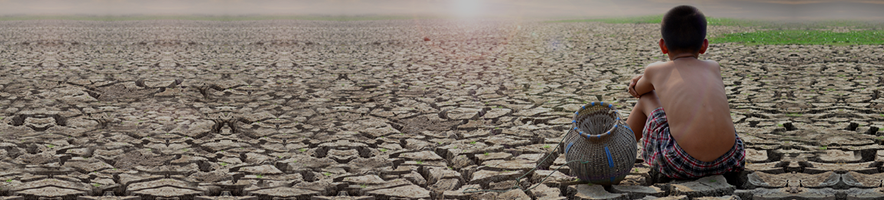
The situation on the Colorado River has rarely been more dire than in this moment. The snowpacks that feed the river are the smallest on record. The reservoirs that hold the majority of its water are nearing historic lows.
“We had to do something to ensure that the river system didn’t completely crash,” Tom Buschatzke, director of the Arizona Department of Water Resources, said in an interview Wednesday.
Arizona, California and Nevada in recent days offered a short-term water-saving proposal. The plan would create new incentives for conservation and pay some water users to give up their annual allotment, which officials from the three Lower Basin states say will save 3.2 million acre-feet of water through 2028. Those measures will hopefully be enough to help maintain safe water levels in Lake Mead, which powers the Hoover Dam and provides water to roughly 20 million people.
That breakthrough comes as the U.S. Bureau of Reclamation, which manages the dams that control the Colorado’s flow, began to release billions of gallons into Lake Powell — the river’s second biggest reservoir. The influx aims to prevent water levels from falling so low the reservoir can no longer produce hydropower — something that the agency estimated might happen as soon as August without intervention.
Meanwhile, an unusual May storm brought as much as 30 inches of snow to parts of the Rocky Mountains last week, helping to supplement the low snowpack after a record hot and dry winter.
But none of these developments will make enough of a dent in the larger crisis facing the Colorado, said Sarah Porter, director of the Kyl Center for Water Policy at Arizona State University.
States in the Lower Basin (Arizona, California and Nevada) and Upper Basin (Colorado, New Mexico, Utah and Wyoming) have failed for years to reach a long-term agreement on how to share the river’s supply of water.
With key guidelines for operating the river set to expire this autumn, the Bureau of Reclamation is in the process of developing a preferred plan for future management. The agency’s decision — expected to come this summer — will determine how cuts are allocated among the river’s 40 million users.
But after decades of overuse and a prolonged megadrought that scientists say is made worse by climate change, only a fundamental shift in the way the Western U.S. uses water can prevent the river from becoming catastrophically overdrawn, according to Porter.
“It sort of shows how bad the impasse is,” she said of the conservation proposal from the Lower Basin states. “It’s not a solution. … It’s what they can agree on to try and stave off disaster.”
The Lower Basin’s last-ditch effort
Before last week’s storm, the snowpack that feeds the Colorado River was the lowest on record, according to the National Water and Climate Center. Most streams in the basin were forecast to produce less than 30 percent of their average runoff.
In the absence of a broader agreement on how to manage the shortfall, Lower Basin states feared the dwindling flows could cause the federal government to institute unilateral cuts. Because water in the Colorado is allocated according to a “first come, first served” system, junior rights holders — including major Arizona cities such as Phoenix and Tucson — could lose a significant fraction of their water supply.
Under their proposal, the Lower Basin states agreed to reduce their water consumption by about 1.25 million acre-feet each year — equivalent to the water needs of roughly 1.25 million to 3.75 million homes. They also suggested new rules for Lake Mead that would allow rights holders who don’t use their full annual allotment from the reservoir to maintain the option to use that water in subsequent years.
“This approach provides a necessary bridge to stabilize the system in the face of deteriorating hydrology, while preserving the opportunity to build towards a comprehensive seven-state solution both for the near-term and for the longer-term,” Lower Basin water officials wrote in a letter to the Interior Department on Friday.
But the plan requires cooperation from the federal government.
In an emailed statement, a Bureau of Reclamation spokesperson said the agency would review the proposal as it develops a strategy for the future of the Colorado. But the statement also emphasized the need for all seven states that rely on the river to find consensus.
A crisis years in the making
Even before human-caused warming began disrupting Western snow and rainfall, the Colorado River was dangerously overexploited, said Jack Schmidt, director of the Center for Colorado River Studies at Utah State University. Century-old rules governing its use were developed during an unusually wet period for the region, leading officials to allocate rights to more water than the river actually contains.
But the situation has grown increasingly dire as the regional climate shifts hotter and drier. Human consumption routinely outstrips inflows, drawing down the water stored in reservoirs.
Lakes Powell and Mead — the two biggest reservoirs on the river — have not been full since the 1990s and are approaching historically low levels.
This year, Schmidt said, the paltry snowpack will supply about 6 million acre-feet of water to the river, far less than the roughly 13 million acre-feet that people typically use each year. Even the snow that fell last week won’t do much to help — warmer spring temperatures will cause it to melt quickly, and the extraordinarily dry soils will absorb most of the runoff.
Schmidt compared the situation to someone losing their job and then continuing to spend most of the money in their bank account.
“We basically have been spending more than our income throughout the 21st century,” he said. “But it really becomes a big crisis when we have a couple years in a row that are very dry, and that’s what we have now. Again.”
Three years of negotiations have deadlocked over disagreement around how the pain of water cuts should be shared among the river’s 40 million users. States in the Upper Basin argue that they already use less than their fair share and naturally curb their consumption during years of low flow. They have resisted any agreement that includes mandatory cuts to their use.
In their conservation proposal, Lower Basin officials urged their Upper Basin counterparts to come up with their own “verifiable water contributions” to keep water flowing through the river. They also reserved the right to sue the Upper Basin and the federal government if they don’t receive what they believe is their legally required water allotment.
“I don’t think there’s much in this to address the impasse between the two basins,” Porter said.