Applying a structured systemic diagnosis and future risk forecasting, leading U.S. and Mexican water experts examined growing cross-border water challenges and identified policy actions to address structural water deficits in the Colorado River and Rio Grande basins. Recognizing that a business-as-usual approach — maintaining current water management practices —threatens economic stability and social cohesion, participants discussed priority actions to lay the foundation for more proactive binational collaboration. The full report of the workshop is available here.
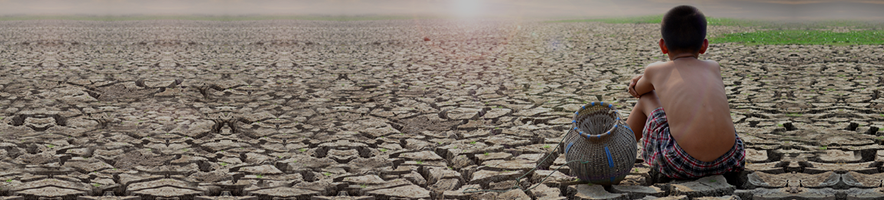
The workshop reached a sobering conclusion: The bilateral mechanisms for managing shared U.S.-Mexico water resources are under acute strain. Population growth, expanding agricultural and industrial demand, and escalating climate pressures — such as rising temperatures and prolonged drought — are outstripping the adaptive capacity of existing water infrastructure and institutional frameworks. In both the Colorado River and Rio Grande basins, water scarcity is accelerating more rapidly than governance can adapt, resulting in a structural water deficit across all sectors, where demand consistently exceeds reliable supply.
To address the gap between existing water resources and sustainable supply for the region, binational stakeholders from diverse sectors consolidated 24 proposed outcomes into four high-impact priorities:
Strengthening the enforcement of the 1944 Water Treaty.
Creating economic and policy incentives for water conservation.
Moving forward, a dedicated task force will aim to transform the workshop’s consensus-driven roadmap into a permanent, actionable binational agenda, engaging broader and more effective stakeholder networks to secure long-term water resilience efforts for both countries. Though not the first effort to address transboundary water challenges — for example, the International Boundary and Water Commission (IBWC) initiatives like the Rio Grande Environment (Minute 331) and Rio Grande Hydrology (Minute 325) work groups — this task force is distinct: a semi-permanent, neutral, and science-based body.
Baseline Analysis of Systemic Pressures
Structural Imbalance Between Water Rights and Supply
The core hydrological challenge is the declining reliability of water availability due to growing demand. This challenge is compounded by increasing variability associated with shifting precipitation patterns, heat-driven evaporation, and unpredictable snowpack levels in the upper river basins. At the same time, river flows are overallocated throughout, with existing water rights and claims exceeding available supplies. Downstream regions bear a disproportionate share of the impacts, experiencing increasingly dry riverbeds that contribute to disputes over water allocation and priorities. Consequently, the gap between water demands and the system’s sustainable capacity is becoming an increasing source of tension.
Groundwater as an Unmanaged Safety Valve
As surface water supply becomes less reliable, water users increasingly turn to groundwater. However, because the 1944 Water Treaty does not include provisions governing groundwater, cross-border flows remain largely unregulated and unmonitored. This regulatory shortfall creates an additional challenge by contributing to the depletion and destabilization of aquifers, threatening the long-term viability of the broader river system. It also increases the potential for future binational disputes over shared groundwater resources.
Data Gap and Trust Deficit
Effective basin management depends on a shared understanding of hydrological conditions. While the Colorado River basin has established data-sharing mechanisms, the Rio Grande basin remains hindered by inconsistent data and information gaps. Without a mutually accepted evidentiary foundation, stakeholders cannot build institutional trust, support treaty implementation, or make informed decisions about joint infrastructure investments.
Projected Risks Under a Business-As-Usual Scenario
Maintaining current practices is not a sustainable trajectory but one of combined risk. Without strategic intervention, continued hydrological decline is likely to increase pressures across interconnected environmental, economic, and governance systems. Potential consequences include:
Hydrological degradation: Reduced flows, greater seasonal variability, and groundwater destabilization that increase the risk of river and aquifer failure.
Water insecurity: Restricted access to water, particularly in downstream regions, rising costs, and deteriorating water quality.
Community decline: Land abandonment, loss of rural livelihoods, and widening socioeconomic inequality.
Economic disruption: Crop failures, agricultural contraction, food insecurity, and a weakening regional industrial base with implications for trade.
Institutional strain: Declining governance capacity alongside increasing illegal water extraction, undermining effective water management and the rule of law.
Social and political instability: Increased migration pressures and growing tensions among affected communities.
Regional economic risk: Intensifying competition between agricultural and urban water users, reducing the long-term economic viability of some regions.
Binational tensions: Water treaty disputes affecting trade, security, and broader diplomatic cooperation.
Comparative National Risks: US Versus Mexico
Left unaddressed, current trajectories may generate distinct yet worsening vulnerabilities across both countries (Table 1):
United States: Persistent hydrological decline places increasing pressure on economic, legal, and political systems. The most acute risks include agricultural contraction, conflict over water rights, worker displacement, regional economic impacts, and rural decline.
Mexico: Worsening water scarcity simultaneously undermines agriculture, urban water systems, political governance, and social stability. The most acute risks include aquifer depletion, weakened rule of law, economic losses, declining investment, involuntary migration, social fragmentation, and reduced community viability.
Table 1 — Differentiated Impacts of Business as Usual on Transboundary Water Issues
Source: Authors’ analysis of workshop outputs.
Strategic Priorities for an Alternative Course
Recognizing border water challenges as a systemic issue requires shifting focus from diagnosis to strategic prevention. Binational interventions are needed to reduce regional risks, establish a baseline for immediate action, and adapt to climate-driven water supply variability.
To move the system toward resilience, four priorities were identified, each giving rise to targeted strategic initiatives:
Trusted scientific understanding: Establishing shared data and common outlooks.
Defining “extraordinary drought”: Creating clear, technical criteria and operational mechanisms to govern extraordinary drought conditions, including flexible adaptation allowances.
Enforcing the 1944 Water Treaty: Strengthening oversight of the agreement so obligations remain credible and actionable.
Economic and policy incentives: Aligning financial and regulatory structures to encourage conservation.
Strategic Initiatives for Enhanced Water Management
Initiative 1: Develop a Shared Framework for Strategic Information
Premise: If a binational, online GIS-based framework is developed, it could serve as a shared, trusted repository of scientific data to form the basis for enhanced decision-making.
Key actions:
Assemble an independent binational group of scientists to develop terms of reference, leveraging the Hydrology Work Group (Minute 325 ) and previous efforts to establish a science advisory group.
Identify high-impact information needed for decision-making, supported by the Rio Grande Environment Work Group (Minute 331).
Integrate data from federal (e.g., USGS and INEGI) and state agencies into a unified workplan.
Initiative 2: Define Reliable Deliveries and Drought Degrees
Premise: If scientifically and technically grounded definitions are developed for different degrees of drought, flexible delivery schedules could be implemented, directly building binational trust. This framework would require ongoing refinement so drought indicators can be adjusted to reflect changing hydrological conditions in both basins.
Key actions:
Establish a binational taskforce to create technical definitions of drought severity.
Create flexible delivery schedules tied to actual, real-time water availability.
Appoint an independent monitoring agent to measure conditions against these definitions.
Initiative 3: Shift to Shared Basin Management and Vision
Premise: If the framework moves from simple treaty compliance to a shared vision of basin management, deliveries could become more predictable and institutional trust would increase.
Key actions:
Execute joint scenarios based on reservoir levels and investment in reuse and conservation infrastructure.
Implement strategies to evaluate potential reduction in perennial crop water use in Mexico and improve conservation on both sides of the border.
Convert quarterly reviews into an early-action mechanism to trigger Article 9(e)and Minute 234 tools when shortfalls are foreseeable.
Initiative 4: Create Incentives
Premise: If the U.S. and Mexico support financing mechanisms for more efficient water deliveries — including accelerated deliveries or volumes exceeding treaty minimums — then reliability and predictability could improve, and accountability would be equitably shared.
Key actions:
Engage entities such as NADBank to use financing structures that promote transparency, accountability, and infrastructure investment.
Strengthen border state participation rather than relying solely on federal engagement.
Provide affected irrigation districts and municipalities with conditional access to preferential financing to mitigate costs for water users.
Establish a framework in which the U.S. pays for excess or contingency buffer deliveries rather than water to which it already has a right.
Moving Beyond Crisis Toward a Water-Secure Future
The proposed initiatives demonstrate that meaningful progress requires more than one type of intervention. Technical data, legal interpretation, institutional coordination, trust-building, infrastructure, financing, and incentives are all interdependent. No single initiative would be sufficient on its own; rather, each addresses a specific bottleneck that currently limits effective action. Together, these initiatives move the conversation from broad agreement toward practical implementation by clarifying who should be involved, which mechanisms can be used, and where further work is needed.
The working group concluded that the lasting value lies not only in specific technical and diplomatic fixes but also in the collaborative process itself, which can strengthen binational trust and support continued cooperation between both countries. Building on the workshop’s momentum, a binational water task force is being established as an action-oriented working group that will bring together leaders from government, academia, civil society, and the private sector. Together, its members will work to address critical water challenges facing U.S.-Mexico border communities, ecosystems, and economies through science- and policy-informed approaches.
Continuing with business-as-usual will not simply result in isolated national challenges but could intensify interconnected pressures on regional stability and political cooperation across the shared hydrological system. Addressing these pressures requires technical and structural strategies to develop a shared approach for managing and allocating water resources across basins. Rebuilding institutional trust and establishing a shared evidentiary foundation are not secondary priorities; they are the central components of long-term binational water security.
This entry was posted on
Sunday, September 20th, 2026 at
5:03 pm and is filed under
Mexico, Rio Grande, United States. You can follow any responses to this entry through the
RSS 2.0 feed.
Both comments and pings are currently closed.