
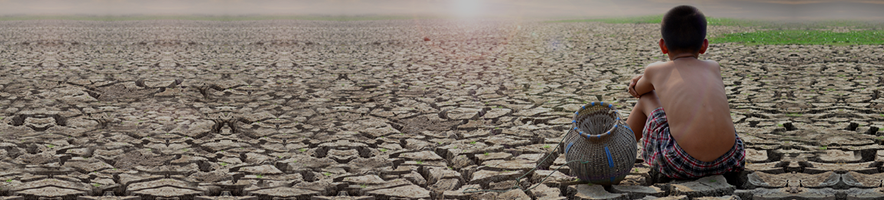
Water scarcity is a fact of life for people in South Texas and the Chihuahuan Desert of northern Mexico. While Texans in the Rio Grande Valley have so far avoided scientists’ predictions of a “Zero Day” when the water runs out, residents of Monterrey, Mexico, have already faced it.
Texas Monthly contributor Jack Herrera has been covering the issue with a series of stories, including one on the growing water demands of new data centers in Texas and another on the complex diplomacy surrounding how Mexico and the United States share a dwindling water supply.
Transcript
Katy Vine (voice-over): Hi and welcome to TM Out Loud, exclusive audio storytelling for Texas Monthly Audio subscribers. I’m Katy Vine.
Water scarcity is a fact of life for people living in South Texas and the Chihuahuan Desert of northern Mexico. At the same time, though, new crops and industries on both sides of the border are pushing the drought even further—data centers in Texas, and wildly popular, water-hungry crops in Mexico.
Add to that the fact that, under the terms of an old treaty, Mexico is obliged to send billions of gallons of water to the United States, and you have the makings of a diplomatic nightmare.
Texas Monthly contributor Jack Herrera has written about water and cross-border politics in a couple of recent stories, and this week on TM Out Loud, he joins me in the studio to talk about what he’s learned.
Here’s my conversation with Jack Herrera.
Katy Vine: Hey, Jack. How are you?
Jack Herrera: Hey, Katy. Nice to be talking to you. Doing good.
Katy Vine: A lot of your writing for the magazine is about how Texas relates to Mexico—historically, culturally, politically—and lately you’ve been writing about the relationship these two places have to water. How did that get on your radar, and why write about it now?
Jack Herrera: Yeah, I mean, I think the simplest answer is that every single inch of the Texas-Mexico border is defined by the Rio Grande. And so when I’ve been reporting on both sides of the border, that is the most ever-present natural feature.
I mean, is it a George Strait lyric or something where that term, the “mighty Rio Grande,” like, somebody talks about the “mighty Rio Grande?” But it’s almost a joke today, because the Rio Grande itself is not a very impressive river for most of its course through Texas. And even south of El Paso, I’ve driven south out of that city, and by the time you’re out of the farmland, there is no river. They call it the Forgotten Reach, the stretch between El Paso and Presidio, where it’s just a dry riverbed for a lot of the year. And this is supposed to be North America’s fifth longest river, and it’s the drinking water for 10 million people or more.
And the fact that it’s just, it looks so anemic when you look at it, you can tell it’s not healthy. I think that’s what really put it on my radar after all these years.
Katy Vine: And so here in Texas, the context is that we’re in the middle of a long drought, right? Even as our water needs keep increasing, can you walk us through the length and scale of this current drought compared to past droughts?
Jack Herrera: One of the things that’s interesting is that drought is so local, so like, the period of drought and the intensity in, like, Austin, it’s different than the period of drought and intensity even, you know, as far south as San Antonio or Laredo. The worst drought the state’s experiencing now, out in West Texas, we’re talking about hundreds of years since this region has seen a drought on that scale. We’re going on, I think, it’s something like 23, 24 years now of this level of drought. Which has gotten some climate scientists to say that this isn’t a drought, this is just a climactic change. This is aridification, where a region that never got a ton of water is now moving into an era where it’s gonna get even less. And so that, that is, I mean, the scale of natural crisis we’re facing.
But one thing that has become really clear to me is that drought is only a portion of the crisis we’re facing. That even if all the rain came back as much as we could expect given natural cycles, our state is still using too much water. We don’t . . . Use has only increased year after year after year, even as we have less. And that’s not sustainable, even if the drought ends, even if water comes back.
Katy Vine: What are the stakes for folks alongside the Texas side of the border where you were doing a lot of this reporting? Not just folks living in the cities from South Padre to El Paso but farmers growing sugar, citrus, and cotton.
Jack Herrera: If there’s water in the reservoirs, the cities get first crack at it. So cities like Laredo, Brownsville, McAllen that are on the Rio Grande, the stakes couldn’t be higher. Take Laredo, for instance, where my grandfather’s from. That’s a city of over 300,000 people. It relies on the Rio Grande for 100 percent of its drinking water. So if the Rio Grande flows goes down, if there isn’t enough to feed the city of Laredo, it’s just game over. The city is gonna have to haul water down on trucks, and you can’t really do that for 300,000 people.
So that is a sort of disaster that researchers will call “Day Zero,” where you get to a point where there is no water, Laredo basically becomes uninhabitable. And that is the case for most other cities in the Valley as well, to varying degrees.
And you might ask why these cities aren’t using groundwater. The water table through most of the Rio Grande’s basin, if you’re along the river, if you’re digging down and you’re trying to have well water, it’s salty. It’s saline. So it’s not as salty as the ocean, but if you want to use that water, you have to either, you know, mix it in small amounts with a ton of fresh water, or get a desal plant up and running. Both of which are really resource and energy intensive. So there’s not a lot of good options here. And so these cities are really living on the razor’s edge of running out of water.
And what’s allowed cities to sort of ignore that danger they’re facing is the fact that they are first in line for reservoir water, for whatever Texas has banked. So when you go to farmers who are next on the priority line, that’s when you start seeing, “Oh my God, we’re in crisis.”
Because for years, these farmers have been getting what they call water deliveries. The amount of water that they’re sending from the reservoirs down to farmers, they’re getting 50 percent of what they’d normally get, 30 percent of what they’d normally get, less than 30 percent of what they’d normally get. And so they’re planting only a portion of their fields, and—
Katy Vine: When I look at the Rio Grande on a map, it looks like the river starts in Colorado, and flows south and east, meeting its final destination in the Gulf of Mexico. But as you explained, that description of the river has been oversimplified for a while. Can you talk about that?
Jack Herrera: Yeah. You know, I think the best way to tell this is how when I really started getting obsessed with the river, and I started reporting on it, my first trip is I went up to the headwaters in the San Juan Mountains of Colorado. So it’s up on the continental divide. Everything that falls on the west of that Continental Divide is going down to the Colorado River, in that basin. Everything that falls on the east is charging towards the Rio Grande.
And so I’m up at the exact origin point up, at this peak, this peak called Canby Peak, watching snow melt into the Rio Grande. So there’s just a snow bank, and then suddenly there’s the river. There’s the Rio Grande itself. And I followed that river all the way down out through Colorado, through New Mexico, to El Paso. And you’re following this river towards the Gulf, but it doesn’t make it to the Gulf.
You get past El Paso. I was in Juárez, and I watch it, like I can see to the . . . Imagine I’m looking at the river, and to the left of me, I see the American Canal pulling the water into El Paso to feed farmland on that side. And you see, what’s left on the Juárez side, by the time you get downtown, it is an algae-choked trickle. And you get south of there, and there’s no river, no river, no river. You drive deeper and deeper into the desert.
And then, just outside of Big Bend National Park, in Presidio, the water comes back. And that’s because there’s this enormous river that passes from the Sierra Madre in Chihuahua, Mexico, charges down through the desert, and then meets up with the Rio Grande in Presidio. And this is called the Río Conchos.
Not a single inch of this river passes through Texas. It’s all Mexican. But in some ways, it’s the most important river in Texas. Because without it, there is no water in South Texas. You know, if you looked at the map, and you looked at flows, there would be an argument to make that, you know what, “Why are we calling this river that’s coming from Colorado the Rio Grande? Let’s call the Río Conchos the Rio Grande, and let’s call this other one a tributary.” That’s, that’s the scale of this river.
And so that waterway is really where the battle comes down to, the Río Conchos in Mexico. I think every Texan should know that name. Because whether you know it or not, that’s the most important river in Texas, by some estimates.
When you spend time traveling along a water—not just a river, but, like, a whole watershed, this is what becomes clear, which is that a river is like an empty garden hose. Like, rivers don’t grow water. It doesn’t just appear in there. By and large, the water’s coming from rain, and the strike zones, they call them, for that rain, there’s really just three in the entire Rio Grande basin. One is the San Juan Mountains—those mountains up in Colorado and, and New Mexico. The other is the Sierra Madre Occidental, in Chihuahua, Mexico. And then there’s a third, which is the Cumbres de Monterrey, so the mountains up above Monterrey, Mexico, they capture a significant amount of water, and that filters down to the San Juan River basin to the Rio Grande.
And that’s never been . . . That’s always been a significant amount of water getting to the delta in the Rio Grande, but it’s not nearly as big as the Conchos. So it’s a smaller amount of water. And the other thing that’s really particular about the San Juan is, while Chihuahua is deserty and mountainous and rural and huge, and so there’s not the same sort of population centers that you see in Nuevó Leon, Monterrey, where you have—that’s one of the biggest cities in Mexico. And it depends on the San Juan for its drinking water. So there’s this Cuchillo Reservoir that holds this drinking water that’s 60 percent of the city of Monterey’s drinking water and then other cities in Mexico, like the Mexican cities on the other side of the Rio Grande, these cities also depend on the water. So this is drinking water. And that is what basically is getting sent North when we talk about Mexico sending water north these days because they are not sending water from Chihuahua. When they’re sending the water that Trump and Abbott and all these officials are demanding, it’s coming from the San Juan Basin. It’s coming from the Cuchillo Reservoir.
In 2022, Monterrey—again, one of the richest cities in Mexico, millions of people in the city—that city ran out of water. They had entire neighborhoods. This was . . . went for months at a time. It was basically waiting for the rains to come.
Katy Vine: That is insane.
Jack Herrera: And so they did, in some areas it was sort of a rolling blackout situation where, “Okay, you’re not gonna get water these days, you’re not gonna get water these hours, so fill up when you get water because we’re gonna limit the system.” But some places—because Monterrey is on the top of a mountain—there’s not enough pressure in the system with that lack of water to reach some neighborhoods at all. And so entire neighborhoods were going without water. And you have water delivery trucks that are getting hijacked on their way into the city. You have scalpers holding buckets, selling just normal plastic buckets for, like, a hundred times their value because people are so desperate to haul water. Obviously if you go into the H-E-B, you go to the bottled water section, shelves are dusty and empty. It’s been completely cleaned out. And so that’s, that is the sort of crisis Monterrey faced. And I think it’s important for Texans to understand part of that crisis, it was severe drought. There’s misuse in Mexico too. But a big part of it is there was this big chunk of water that was sent north to Texas.
Katy Vine: And then that can lead to, in one recent case, rioting, right? Can you talk about what happened in 2020?
Jack Herrera: Yeah. So that’s the big question mark. Why is Mexico not sending water from Chihuahua? They tried.
In 2020, they opened the big dams of this reservoir, in Chihuahua, to send water north. And farmers and growers in the region organized into a protest, like a, you know, campesino rebellion, peasant-farmer rebellion, that got so massive that AMLO, the president at the time, sent in the military. And hundreds of soldiers garrisoned themselves on this dam to defend it from this army of, like, poor farmers with, you know, throwing sticks and rocks, and the army shot tear gas and rubber bullets back. You have this huge clash. And what happens is the farmers win this battle with the military.
I spoke to this guy, Victor Velderrain, and he showed me how he led a group of five hundred men and women armed with sticks, farm implements and sticks, up through basically deer trails through the thorn bush, crawling hand over hand, getting scratched up, to climb up over the western ridge of the dam, and they ran down at the soldiers. And by the time they hear these guys running at them, they turn around and they see a bunch of men and women, bunch of farmers armed with sticks, and the soldiers just go, all right, game over. And they put down their weapons and they surrender, and they gave up the dam. And so these peasants, these farmers . . . And to be fair, I’m calling them peasants, but some— those were the people who are the most desperate, but there’s large-scale growers who are supporting this protest, obviously—they take over the dam, they take over the control room, and they shut what they call la cortinas, the gates that control the water. They shut it. They occupy the dam, they hold it, I think, for a few weeks.
And with some exceptions, basically since then, the federal government hasn’t tried to send water north from Chihuahua anymore. That reservoir, they don’t touch it, because the risk you run there is not just protests, but successful rebellion, successful peasant uprisings.
I’m making a nuanced situation very simplified here, but just because we’re doing the podcast version of this, the federal government’s control of Chihuahua has always been more tenuous and more complicated than the federal government’s control—like, the American federal government’s control—of, I don’t know, Maryland. Like, it’s a more complex situation.
Katy Vine: And it sounds like even when they do give water, like when they sent the water from the Rio San Juan, it wasn’t the kind of water that Texas farmers wanted anyway, because it was too salty, right?
Jack Herrera: Yeah. It’s a Band-Aid. It’s Band-Aid. It’s Mexico, it’s Mexico buying time and giving Trump what he wants. And so, you get his State Department or . . . They claim the win, “Mexico agreed to send water.” They send San Juan water for a little bit, and in a few months, we’ll be right back where we started. And Mexico probably does need to send more water north, like, probably isn’t being fair to the treaty. That said, Mexico doesn’t have enough water. That’s the other really big thing to understand here is that Mexico is not the silver bullet. Like, if you get Mexico to fulfill the treaty, that’s maybe one-third of the water Texas is missing. Two-thirds of it are still unaccounted for. We don’t have another source for it.
I really hate to be a bummer, but like this is the situation we’re in, where we don’t fix this by getting Mexico to send us water. Even if Mexico sends us way more water than it can afford, if it dooms Monterrey, if it collapses the Chihuahua farming industry, Texas still won’t have enough water. We are simply using too much.
But the thing that I think really sticks out to me when I was there this fall reporting on the drought and talking to people who were telling me these stories, I just thought to myself, like, “Wow, this could happen in Texas. This is the future we’re facing.”
And this is the point I think I want to underline for all the listeners: When we talk about climate change, or we’re talking, like, ten years out, fifteen years out. Or maybe it’s saying like, “Worst-case scenario for the modeling, this happens.” The situation I’m describing, where Laredo or Brownsville or McAllen run out of water, is gonna happen, is at risk of happening a lot sooner than you think.
I asked, this guy Samuel, Samuel [Sandoval Solis], he’s considered—he’s a professor at UC Davis, in California, considered potentially the number one expert on the Rio Grande. I asked him, “When do you—what—how in trouble is Laredo or Brownsville or these cities?” And he said, “You know, I’ve been predicting a Day Zero for four years now. Four years ago I predicted that that year the cities would run out of water. And for the last four years they’ve escaped by the skin of their teeth because of winter storms have hit at the right moment and recharged some of the reservoirs.” But it’s really just luck. If we don’t have a good rainy season, if we don’t get new water in the reservoirs in the next year—we’re really talking, like, in the span of one or two years—we could be facing this Day Zero situation, where major Texas cities and major centers of industry are running out of drinking water, entire farming industries are obliterated and, you know, go so far into debt that they can’t come back in the future. That is what we’re facing down right now, and it’s really on a short-term timeframe. Like, we’re getting lucky with the rain. It comes down to, if it rains, we’re okay. If it doesn’t rain, or it doesn’t rain enough, we’re—you know, pick your creative, folksy Texas idiom, but we’re up, up a creek without a paddle.
Katy Vine: I think you mentioned that in December, President Trump accused Mexico withholding water it owes the U.S. I think he was referring to a treaty from Mexico with, from 1944. Can you tell us about that treaty and the threat that he made?
Jack Herrera: Yeah. This is, I mean, this is really important for Texans to understand. I think we see it in the headlines, but like there’s so much spin on both sides. But basically, in 1944 you get—Mexico and the United States realize that they have a real problem. And that’s the fact that, where we set the borders between the two countries—we drew a line in the Rio Grande and all through Arizona and New Mexico and California—the rivers and the watersheds that existed in that area didn’t pay any attention to us drawing that border.
So the Colorado River still flows down into Baja California, and the Rio Grande still flows from Colorado down towards Chihuahua. And then in the other direction, you have the Río Conchos and the Rio San Juan and the rivers that flow up and recharge the Rio Grande.
And you have a sort of prisoner’s dilemma, where both countries, if they were just focusing on just their own people, they’re like, “Why would we send this water south to Mexico?” And Mexico is, “Why would we send it north to the United States? Let’s build our own reservoirs, keep as much of it as we can, and give it to our farmers.”
And so that is where you have the need for international diplomacy. And so that’s what this 1944 treaty makes these agreements in, which is you need to send this much water—United States agrees to send this much water, Mexico agrees to send, you know, that much water. There’s this provision in it that says that in times of extreme drought, you can miss your deliveries of water. And Mexico has invoked that provision.
The problem is, it’s very vague. It doesn’t say, like, “Do you go into debt and have to pay it back later?” That’s the sort of debate on the table. So that’s, when Trump says they haven’t delivered their water, or Greg Abbott or Sid Miller, the head of agriculture in Texas, makes that argument that Mexico’s, you know, over a million gallons behind on its deliveries to Texas. That’s 100 percent true. So farmers who’ve relied on that water, were expecting it, aren’t getting it. And so it’s like asking . . . It’s like somebody owes you money, and you go up to them, and they go, well, “I’m bankrupt. I don’t have the money.”
But this is the situation we’re in where Mexico says, “We’re in drought, we don’t have any water. Did you not just see Monterrey run out of water a few years ago? Like, we don’t have any for you.” And Texas farmers are also in drought. They know the situation. So they’re sympathetic, they’re like, “Yeah, it’s bad water, bad water in this part of the world right now. We get you. But bs—bs that you’ve run out of water, that you just like, you just had the situation because . . . And this is what the crux of the matter is, when you go to Chihuahua, I saw pecan orchards as far as the eye could see. You know, standing on a mountainside and I can see them disappearing to the horizon. Because there’s a huge market for pecans in China.
I had no idea about this, but pecans are a really, really popular snack in China. And so in Chihuahua, and to be fair, in Texas and New Mexico, along the Rio Grande on the American side, there’s been a huge explosion of pecan orchards. And tree nuts use a lot of water. Tons of water. So you have . . . Farmers in South Texas are looking at this, and over, over the last few decades, Chihuahua has sort of, like, pulled their pockets out, and they’re empty, and they’re like, “Look, I have no water to give you.” And Texas is sort of looking behind Chihuahua’s shoulder and being like, “What’s all that? What’s all that, then? What’s all this farming? You’ve more than doubled your pecan orchards in the last three decades.”
It’s a complicated situation. Like, Mexico is, really doesn’t have enough water. They’re running out of water. They are. But they’re also increasing use. And it’s the same thing on the American side. Our state’s just in big trouble. And I think that that’s the thing to underline, is there’s a diplomacy that has that with Mexico. There’s infrastructure that needs to be built to help us save water and maximize our use of it efficiently.
But at the end of the day, we can’t support this level of use in Texas pretty much anywhere in the state, except for the east, where the hurricanes hit all the time. We just don’t have enough water to support industry on this scale.
And what I’m talking about is mostly agriculture. That’s the good news here: Drinking water is a tiny percentage of, of that water. So we do have enough water to feed people. But if we want to give farmers the water that they’ve paid for, that they, you know, they’ve helped build the infrastructure, they’ve helped pay for it, they’ve bought their water . . . I don’t see a solution where we don’t have to change our agricultural system. The solution out of this involves us using less water, and that means farmers using less water.
Katy Vine: Well, there’s a lot of discussion I’m sure, ahead, on this subject—I hope, I hope.
Jack Herrera: Yeah. Yeah. And not to say, I mean, the other thing, again, this is—Let me finish with a, a really depressing point, which is—
Katy Vine: You always do that! [laughs]
Jack Herrera: —Water use goes up in every industry. Right now, Texas is building data centers, like some of the biggest data centers in the world are being planned or proposed and built in Texas. And data centers use millions of gallons of water a year to cool their, uh,, their chips. They use a ton of water. I think the estimate was last year, Texas data centers in the state used something like 49 billion gallons of water. So that’s like enough to cover Austin for a year. Enough drinking water for Austin for a year. That’s how much our data centers are using. I think the water situation is so much worse than anyone can really— anyone really acknowledges in Texas, or cares to acknowledge. But we’re not slowing down how much we’re using. We keep dedicating it to more industries. Fracking out in the Permian Basin, or in the um, the shale, the oil region down and around the Eagle Pass area, like, that is using fresh water for fracking, for hydraulic fracturing. And they’re, they’re, again, trying to transition out of it, but they’re still using fresh water.
All of our infrastructure here is fifty, sixty years old. There’s a technological solution. We can invest billions now to save hundreds of billions later on. Like, we can save water, make these decisions easier, save more of it. But the big innovation we’re going to have to make is to our democracy. We need institutions that have the democratic legitimacy and technocratic know-how to decide who gets what water in a drying-out world in 2026 and onward.
Water’s precious. It’s not just drinking water. It’s so useful for all these industries. It is so important towards the money-making in the state. And everyone wants to use more of it, and you can’t invent new water.
Katy Vine: Thank you so much for coming in. Yeah.
Jack Herrera: Yeah. Thanks for letting me come on and be a big old bummer.
Katy Vine: I’m gonna go buy our rainwater collection system now.
Jack Herrera: Yeah.
Katy Vine: Thanks, Jack.
Jack Herrera: Yeah. If you’re, if you’re a bond villain with a bunch of capital laying around, you should go buy some water rights. Become a water venture capitalist.
Katy Vine: Thank you so much.
Katy Vine (voice-over): That was my conversation with Jack Herrera.
You can read his stories about Mexico’s water crisis and about the growth of data centers in Texas at texasmonthly.com