Every love story has a rhythm. Moments of closeness and distance, and the quiet damage done when one partner takes more than the relationship can bear. Pakistan’s story with water echoes this, swinging between two extremes that have never learned to reconcile. Floods and drought competing with each other only months apart.
Pakistan’s year moves between two seasons that feel like opposites but are in fact closely connected. During the monsoon rains swell rivers and towns along their banks brace for floodwater. A few months later, the same sky becomes silent, the same rivers thin to a trickle, and the same towns now queue for tankers as their fields dry up. Flood and drought are two parts of the same story: water arrives in overwhelming abundance in one season, only to become desperately scarce in the next.
More than 13,000 glaciers across the Karakoram, Himalaya and Hindu Kush feed the Indus basin like a water tower feeds a city, releasing snowmelt gradually to sustain rivers and farms. When that release arrives as floods instead of flows, less is left for the dry months that follow.
This is the paradox: a country blessed with five rivers, monsoon rains and some of the highest glaciated peaks on Earth is sliding toward water scarcity. Per capita water availability has fallen from roughly 5,260 cubic meters in 1951 to under 1,000 today, well below the threshold for scarcity. It is a sobering decline, but it indicates a pattern, not a life sentence. Pakistan is not short of water. It is short of the means to capture, store and reuse what already falls from the sky.
The paradox of floods and droughts
Urban centers are the first victims of heavy rainfall. Intense rain falling on paved roads quickly becomes runoff, overwhelming drainage systems that, in almost all cities, carry both sewage and stormwater. What follows is widespread flooding, water entering buildings, submerging roads, disrupting traffic and school life, while businesses close and daily life is brought to a standstill. By the time authorities comes into action, trying to drain the area with heavy pumps, the cost has already been paid.
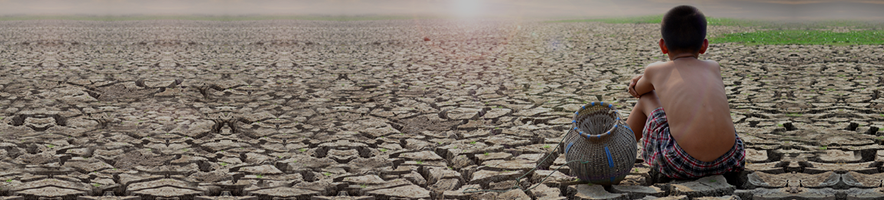
In the Tharparkar and Cholistan deserts and parts of Balochistan province, drought is a recurring problem. When rain fails, ponds and shallow wells can dry up within weeks. Livestock suffer first, and many families are forced to move to towns in search of water and work.
The land suffers too. Once-green grazing areas in Balochistan are turning into dry, barren land. This process, known as desertification, also creates loose soil that adds to dust storms. At the same time, Balochistan’s traditional karez system — underground channels that have supplied water for centuries without pumps or electricity — is falling into disrepair, just when people need it most.
A solution with limits
Pakistan can face severe floods in August and water shortages just a few months later. In Karachi, people may wait for water tankers; in Cholistan, ponds may run dry. Underlying these contrasts is a persistent challenge — too little water is captured and stored when it is available.
As traditional karez systems fall into disrepair, tubewells are increasingly used to pump groundwater. But excessive pumping is lowering groundwater levels and, in some areas, making the water more saline. In simple terms, the country is using groundwater faster than nature can replenish it. Without better water storage and management, the gap between water supply and water demand will continue to grow.
Solar power is often seen as part of the solution. Solar-powered tubewells can replace expensive diesel pumps with cheaper, cleaner energy. In areas where groundwater is available and naturally replenished, they can benefit farmers by reducing costs and emissions without placing undue pressure on the aquifer. But solar pumping can also create problems if it is used without considering local conditions. In areas where groundwater is already deep and rainfall is low, cheaper pumping can encourage farmers to pump more water than the aquifer can replace. This can cause groundwater levels to fall even faster. The answer is not to stop using solar power, but to use it wisely. Pakistan needs to expand solar pumping where groundwater can support it and introduce limits where it cannot.
Beyond managing how groundwater is pumped, Pakistan also needs to make better use of water when it is available. Practical solutions already exist, and many are relatively simple. In cities, rooftop rainwater harvesting and recharge wells can capture rainwater that would otherwise run into drains and be lost. This water can be stored underground and help replenish groundwater. In dry areas, solutions include repairing karez channels, building small reservoirs to store rainwater, and growing crops that need less water like millet and sorghum. These are simple steps, but together they can make a real difference. Better water storage, groundwater recharge and water-efficient farming can help both cities and dry regions cope with water shortages.
A shared responsibility
Pakistan has many water policies and laws. The challenge is putting them into practice. This requires government action, investment and long-term commitment, but the responsibility does not lie with the authorities alone. Our own choices also matter. A household can collect rainwater and farmers can avoid pumping more groundwater than they need. Small decisions like these, repeated across millions of households and farms, can make a difference. Climate change is intensifying Pakistan’s water challenges, increasing the pressure on communities already struggling with water extremes.
There is still reason for hope. The monsoon still brings rain, glaciers still feed rivers, and rain still reaches cities and deserts. The real challenge is learning how to capture and manage this water when it is available.
If Pakistan can capture rain, recharge groundwater, store water for dry periods and use it wisely, heavy rains do not always have to become floods, and dry months do not have to mean severe water shortages.

BLOG
Pakistan: In Search of a Lasting Water Solution
November 16th, 2026
November 16th, 2026
Via IWMI, a report on how Pakistan – a country caught between extremes – has long oscillated between floods and droughts. It is now time for a lasting solution.
This entry was posted on
Monday, November 16th, 2026 at
11:55 pm and is filed under
Pakistan. You can follow any responses to this entry through the
RSS 2.0 feed.
Both comments and pings are currently closed.
© 2026 Water Politics LLC . 'Water Politics', 'Water. Politics. Life', and 'Defining the Geopolitics of a Thirsty World' are service marks of Water Politics LLC.