At the end of 2023, 75.9 million people were living in internal displacement, a record high, with nearly half in Africa alone. By 2050, the World Bank projects that 216 million more could be forced to move within their own countries, driven by droughts, floods and crop failures.
These aren’t just migration statistics. They are early warnings of a fundamental shift in global security. As sea ice melts, rivers fail and harvests collapse, the map of geopolitics is changing. Policymakers must treat climate change as a security problem, not just an emissions problem, because the physical impacts are already increasing migration, resource competition and strategic friction between states and within states.
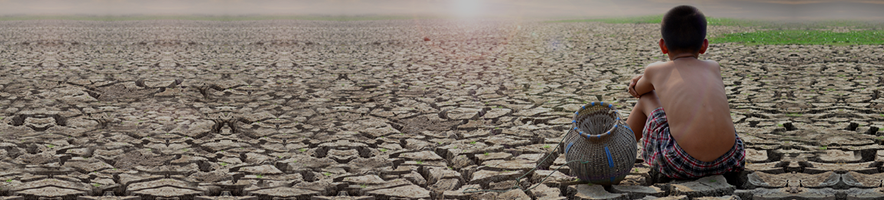
The planet has warmed by approximately 1.1 C since the pre-industrial era, and the consequences are cascading through political and security systems worldwide. The pathways are multiple and interconnected. Heat waves and prolonged droughts devastate agricultural yields, pushing desperate rural populations toward overcrowded cities. Water scarcity intensifies competition between upstream and downstream users, straining diplomatic relations. Melting Arctic ice opens new shipping lanes and resource access points, triggering great-power competition in regions that were previously frozen and inaccessible. Economic stress from climate disasters erodes state capacity precisely when populations need governance most, creating power vacuums that extremist groups exploit.
In Syria, one of the worst droughts in recorded history between 2006-2010 displaced 1.5 million farmers and destabilized rural economies, contributing to civil unrest that eventually drew in global powers. In the Sahel region, where Lake Chad has shrunk by 90% over six decades, prolonged droughts and degraded soil have enabled violent extremist groups to offer food, security and water where weak governments cannot. These are not isolated incidents; they represent a pattern of climate stress amplifying existing vulnerabilities, turning manageable tensions into violent confrontations.
The thawing Arctic offers perhaps the clearest example of how climate change is reshaping strategic calculations. As ice recedes, new maritime routes are opening; the Northern Sea Route could cut shipping times between Asia and Europe by 40%. Russia, China and the U.S. are all updating their Arctic strategies, positioning military assets and claiming territorial rights in waters that were impassable just decades ago. What was once a frozen periphery is becoming a contested center of 21st-century geopolitics, complete with resource extraction ambitions and naval posturing.
In a warming world, fresh water is becoming the most contested resource. The Indus River basin, shared by nuclear-armed India and Pakistan, supports over 300 million people. Reduced glacial flow from the Himalayas and increasingly unpredictable monsoon patterns threaten water availability on both sides, heightening military vigilance. In Northeast Africa, Ethiopia’s Grand Ethiopian Renaissance Dam has escalated tensions with downstream Egypt and Sudan, who fear reduced Nile flows will devastate their agriculture. Recent research on transboundary river systems confirms that climate-driven variability in water flows increases both the risk of disputes and the urgent need for diplomatic mechanisms to manage them.
For low-lying island nations in the Pacific and Indian Oceans, climate change poses an existential threat. Rising seas threaten to erase territory, identity and sovereignty itself. Entire populations face the prospect of permanent displacement, raising unprecedented questions in international law: What happens when a nation loses its land? Who protects climate refugees when borders close? These states contribute almost nothing to global emissions yet face erasure, a moral crisis that underscores the profound injustice embedded in climate impacts.
The macroeconomic stakes are staggering. Recent analyses project climate damages could reach $38 trillion annually by 2050 if current warming trajectories continue. These aren’t abstract future costs, they represent shattered infrastructure, failed harvests, displaced workers and overwhelmed public services happening now and accelerating rapidly.
Yet most national security frameworks remain rooted in 20th-century assumptions. Military strategists plan for territorial defense while climate quietly redraws the conditions under which conflicts emerge. Development agencies treat climate as an environmental issue while it fundamentally alters the social contracts between states and citizens. This institutional mismatch is dangerous.
What’s needed is a fundamental reorientation. Climate adaptation must be integrated into national defense strategies and diplomatic planning. Regional river commissions need enforcement mechanisms and conflict-resolution protocols before tensions boil over. Migration planning should anticipate climate-driven displacement rather than react to humanitarian emergencies after they explode. Investment in climate-resilient infrastructure, particularly in vulnerable regions, is not charity, it is strategic prevention.
The alternative is a world where droughts spark military mobilizations, where crop failures trigger border closures and where great powers compete for newly accessible resources rather than cooperate to manage shared risks. We’ve seen how quickly cooperation can fracture under pressure, from grain embargoes to vaccine nationalism during recent crises.
The road to climate conflict is not inevitable, but the window for prevention is closing rapidly. Every tenth of a degree of additional warming multiplies the stress on food systems, water supplies and political stability. Every year of delayed adaptation investment is a year that vulnerable communities become more fragile and tensions more entrenched.
The question before policymakers is stark: Will climate change be managed as a shared security challenge requiring unprecedented cooperation, or will it become another axis of competition in an already fractured world? The answer will shape not just environmental outcomes, but whether the 21st century becomes defined by collaborative resilience or climate-driven conflict. We’re already seeing the warning signs. The only question is whether we’ll act before displacement becomes warfare, before drought becomes siege and before a warming planet ignites tensions we can no longer contain.

BLOG
Climate Wars: How a Warming Planet is heating up Global Tensions
November 22nd, 2025
November 22nd, 2025
Via Nikkei Asia, commentary on how a warming planet is heating up global tensions:
This entry was posted on
Saturday, November 22nd, 2025 at
4:41 pm and is filed under
News. You can follow any responses to this entry through the
RSS 2.0 feed.
Both comments and pings are currently closed.
© 2026 Water Politics LLC . 'Water Politics', 'Water. Politics. Life', and 'Defining the Geopolitics of a Thirsty World' are service marks of Water Politics LLC.