Bangladesh is pushing ahead with dam and reservoir projects as it recalibrates its approach to cross-border water management after years of diplomacy with India have yielded few tangible results, instead looking to China to help address issues of drought, flooding and salination that have affected millions.
India’s upstream dams — particularly the 50-year-old Farakka Barrage, a type of dam with gates used to control water levels and redirect flows — are blamed for contributing to these issues. At the same time, critical river-sharing agreements with India remaining either unsigned or unimplemented.
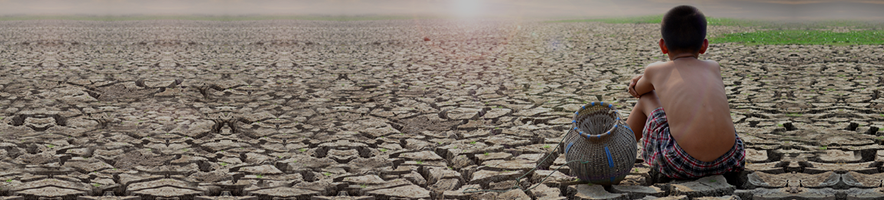
At least 79 rivers across Bangladesh have dried up or are rapidly drying up, posing a serious threat to livelihoods, agriculture and biodiversity, according to a study by the Dhaka-based Rivers and Delta Research Centre published last year. Heavy siltation has left all of these rivers either completely or partially dry during the lean season, a condition largely attributed to upstream water diversion, the organization said.
Against this backdrop, the Bangladeshi government in mid-May announced that it would proceed with the $2.8 billion, 2.1-kilometer Padma Barrage and a revised Teesta Mega Project. The former is intended to store monsoon water for the dry season when southwestern Bangladesh sees a reduced amount of water and increased salinity, a problem Bangladeshi hydrologists attribute to Farakka, while the latter is a China-backed river management and land reclamation projected intended to protect farmland and reduce erosion.
Prior to the construction of the Farakka Barrage, the Ganges-Padma river system maintained dry-season flows averaging around 70,000 cubic feet per second. After 1975, that figure plummeted, frequently dropping to between 10,000 and 20,000 cubic feet per second, according to Bangladesh Water Development Board.
Bangladesh and India share 54 rivers, but tensions have mostly surfaced over water-sharing from the Ganges and Teesta rivers. A 2011 agreement regarding the Teesta, which would have seen 37.5% of dry-season flow allocated to Bangladesh, broke down due to opposition from the state government of India’s West Bengal. Meanwhile, India has faced accusations of not sharing enough water under an Ganges agreement, which is due to expire in December, although negotiations to extend it are ongoing.
“The Teesta issue has remained unresolved for a long time,” said M. Humayun Kabir, a former Bangladeshi diplomat. “Furthermore, we have not received any significantly positive response from India on this matter. … We are bearing the consequences and suffering greatly as a result.”
This frustration has aided China, which has been courting Bangladesh in recent years through initiatives ranging from infrastructure to healthcare. India’s potential involvement in the Teesta project, mooted during the administration of New Delhi-aligned Prime Minister Sheikh Hasina, took a hit after Hasina was ousted in an uprising and bilateral relations nose-dived.
China’s involvement in the Teesta project “signals a significant shift with serious strategic implications for India,” said Uttam Kumar Sinha, a senior fellow at the New Delhi-based Manohar Parrikar Institute For Defence Studies and Analyses and an expert on transboundary rivers. “Dhaka’s turn toward Beijing is a direct consequence of New Delhi’s years of inaction on the long-pending water-sharing agreement.”
Beijing’s involvement is particularly sensitive for New Delhi because the Teesta project is situated close to the Siliguri Corridor, or the “Chicken’s Neck,” which is a critical, narrow stretch of land in West Bengal that serves as the sole terrestrial lifeline connecting India’s mainland to its eight northeastern states.
“We cannot wait year after year for the Teesta Project. India has to understand that it is a development project, not a security structure,” said Imtiaz Ahmed, executive director of the Centre for Alternatives and a former professor of international relations at the University of Dhaka.
For China, the project offers a chance to deepen its relationship with Bangladesh, demonstrate its infrastructure capabilities and development model, and bolster its expanding presence across the region, Sinha said.
“China has made a habit of filling the vacuum created by India’s hesitation, and the Teesta is no different,” he added.
Still, there are concerns about the effectiveness of the projects, regardless of any partner. In the case of the Padma Barrage, the Bangladesh Poribesh Andolon, an environmental nonprofit, said it is a “reckless step,” warning that the structure could severely damage Bangladesh’s delta ecosystem as well as weaken claims to Ganges water from India. In terms of environmental impacts, it identified risks of reduced flow in central regions as well as siltation and flooding.
Meanwhile for the Teesta project, in addition to concerns about transparency, environmental groups say that it will require continued expensive maintenance and that it doesn’t address the fundamental issue of water shortages during the dry season.
That highlights how, even if Bangladesh turns toward China for assistance, there is still no getting away from the importance of India as the upstream state.
“We first need to know exactly how much water will come from India in each season, since unless adequate flow is guaranteed, the Padma Barrage will not be able to provide anything, as a barrage cannot create water,” said Md. Khalequzzaman, a professor of geology and oceanography at Commonwealth University of Pennsylvania.
Technical experts from Bangladesh and India held a four-day meeting in Kolkata from May 20 in a fresh push to renew the 30-year Ganges River treaty, but neither side made any comment after the meeting.
“India is likely to seek a more flexible and adaptive framework based on real-time flow assessments, periodic reviews, stronger technical cooperation and basin-level management, rather than fixed volumetric guarantees alone,” Sinha said. “I would say, from my understanding, that the next agreement may be shorter in duration and more technocratic in design.”
Ultimately, Bangladesh finds itself in a tough negotiating position with India, even after turning to China and trying to bolster its diplomatic efforts by last year joining the U.N. Water Convention, which covers transboundary resources. Analysts say Dhaka should also ratify the separate U.N. Watercourses Convention, although structural issues would remain.
“Water-sharing between the two is constrained by a combination of hydrology, domestic politics, federal structures and growing climate pressures that make durable agreements inherently difficult,” Sinha said.

BLOG
Bangladesh Tilts to China as India Water-Sharing Impasse Deepens
June 2nd, 2026
June 2nd, 2026
Vai Nikkei Asia, a report on Dhaka’s recenal approval of several major river projects amid mounting water issues:
This entry was posted on
Tuesday, June 2nd, 2026 at
9:53 am and is filed under
Bangladesh, China, India. You can follow any responses to this entry through the
RSS 2.0 feed.
Both comments and pings are currently closed.
© 2026 Water Politics LLC . 'Water Politics', 'Water. Politics. Life', and 'Defining the Geopolitics of a Thirsty World' are service marks of Water Politics LLC.